
Sam Walton and Walmart
Small-town discounts that built a giant. Sam Walton ran variety stores in small Arkansas towns before opening the first Walmart in 1962. Low prices and tight costs did the rest.
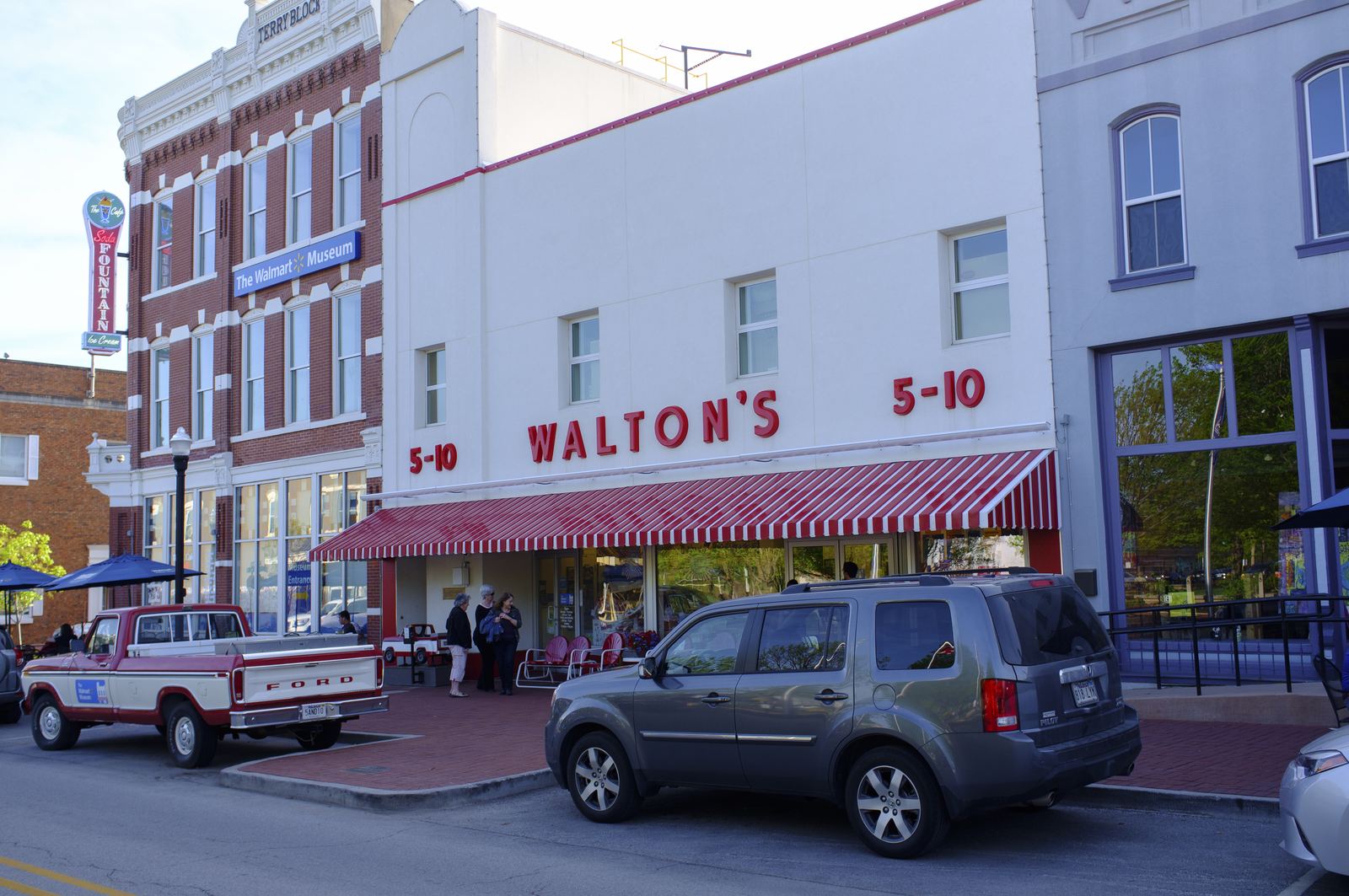
Walton's 5-10, Bentonville, Arkansas: Russ, CC BY 2.0
Learning on a franchise
After serving in the Army during World War II, Sam Walton used savings and a loan from his father-in-law to buy a Ben Franklin variety store franchise in Newport, Arkansas, in 1945. He experimented constantly, buying direct from suppliers when he could and cutting prices to move more goods. Sales took off, but when his lease ran out the landlord declined to renew it, and Walton lost the store.
He started over in 1950 in Bentonville, Arkansas, with Walton's 5-10 on the town square. That building is now the Walmart Museum.
The big bet on discounting
By the early 1960s Walton was convinced that discount stores would reshape retail. His franchisor was not interested, so he opened his own: the first Walmart Discount City in Rogers, Arkansas, on July 2, 1962. His strategy was to put big stores in small towns that larger chains ignored, then win on price.
The math was simple. Accept a lower markup on each item, sell far more items, and keep costs brutally low. Walton famously drove an old pickup truck, shared hotel rooms on buying trips and visited competitors' stores to learn what they did better.
Systems behind the shelves
Walmart invested early in distribution centers and later in computers, satellite communications and data sharing with suppliers. Those systems let the company restock efficiently and cut the cost of moving goods, savings it passed on as lower prices. Walmart went public in 1970 and spread across the country over the next two decades.
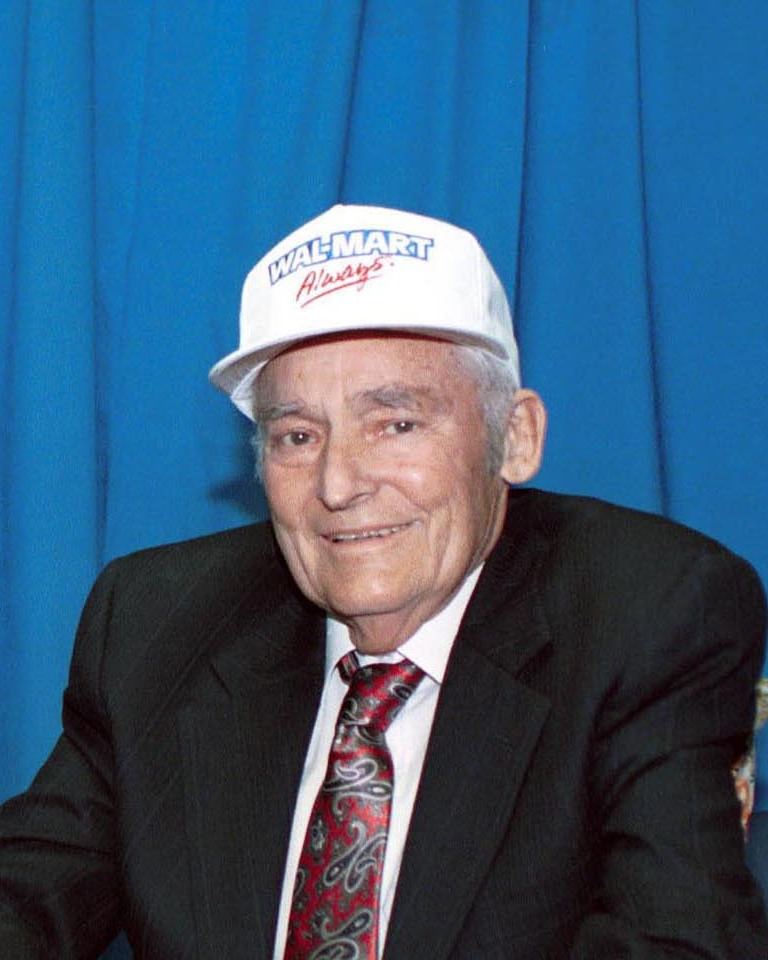
Walton received the Presidential Medal of Freedom in March 1992 and died a few weeks later. His autobiography, Made in America, came out the same year.
He also gave store managers real responsibility and encouraged employees, whom he called associates, to share ideas. Profit sharing and stock purchase plans gave many workers a direct stake in the company's results, which Walton believed made them care more about customers and costs.
The boss lesson
Walton showed that a thin margin can beat a fat one when it brings in enough volume. He also proved that losing everything once, as he did in Newport, is not the end. He used that loss to choose a better location and sign stronger leases.
Finally, he treated competitors as free teachers. Walking a rival's aisles with a notepad costs nothing and often reveals the next improvement.
Facts on this page were checked against these sources.
- Walton's 5-10, Bentonville, Arkansas: Russ, CC BY 2.0
- Sam Walton, 1992: Photo credit: George Bush Presidential Library and Museum, Public domain
Text written by Biggest Bossman.


.jpg)
.jpg)