Bonds Explained
Lending money for steady interest. A bond is a loan to a government or company that pays interest. Treasury bonds, corporate bonds, why prices fall when rates rise, and their role.
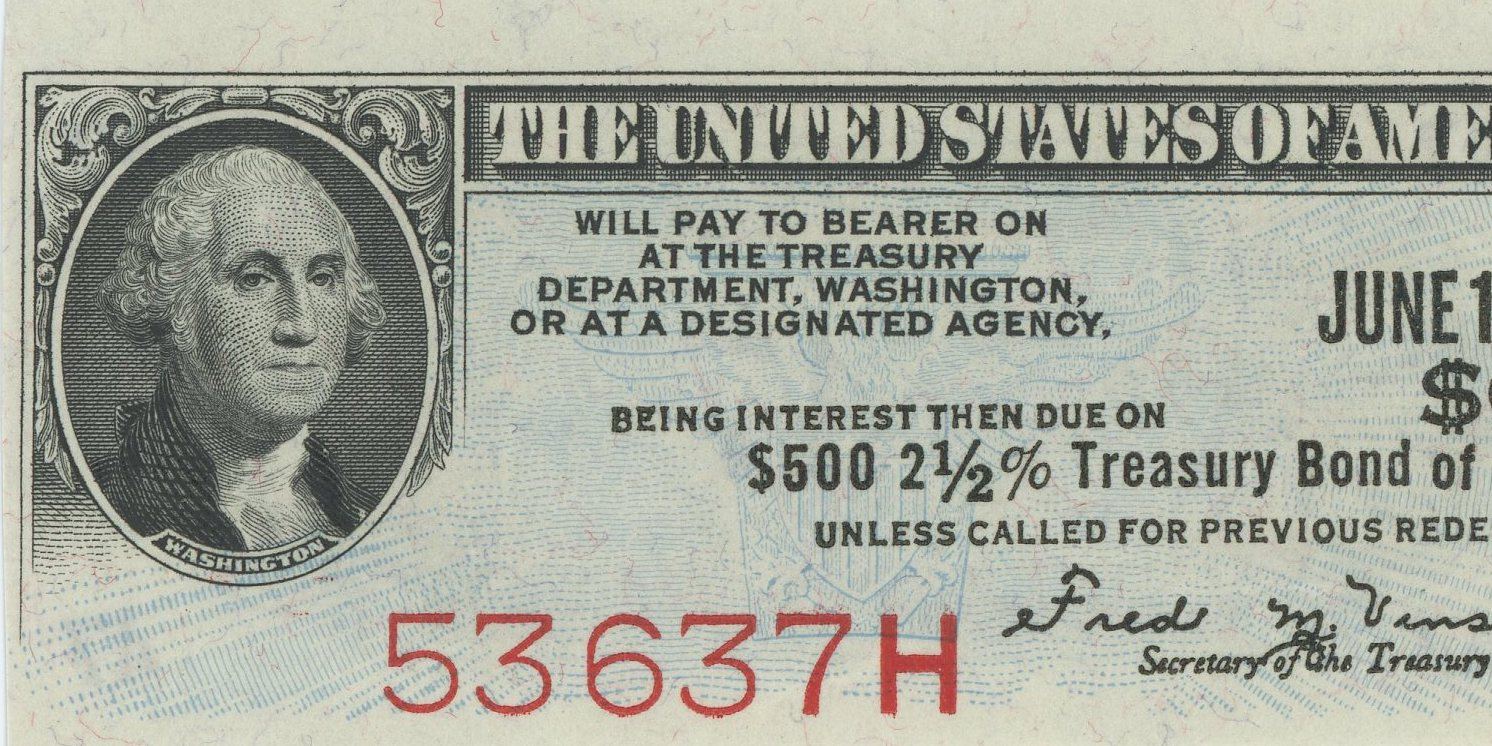
A historic Treasury bond with coupons: JHerbstman, Public domain
Lending, not owning
When you buy a bond, you lend money to the issuer, such as the US Treasury, a city or a company. In return the issuer promises to pay interest, called the coupon, at regular intervals and to return your original amount, the principal, at maturity. The name coupon comes from old paper bonds like the one pictured, which had tear-off coupons to claim each interest payment.
Types of bonds
US Treasury securities are backed by the US government and considered very low credit risk. Corporate bonds pay more because companies are riskier borrowers; high-yield or junk bonds pay the most and carry the most risk. Municipal bonds, issued by cities and states, may offer tax advantages. Inflation-protected Treasuries (TIPS) and Series I savings bonds adjust for inflation.
Why bond prices move
Bond prices and interest rates move in opposite directions. If you own a bond paying 3 percent and new bonds start paying 5 percent, nobody will pay full price for yours, so its market price falls. Longer-term bonds are more sensitive to rate changes. This is why bond funds can lose value in years when interest rates rise quickly, as happened in 2022.
Key takeaways
A bond is a loan that pays interest and returns your principal at maturity. Government bonds are generally safer than corporate bonds, which pay more for extra risk. Bond prices fall when interest rates rise, especially for long-term bonds. In a portfolio, quality bonds can steady the ride when stocks fall. Inflation-protected bonds help protect against rising prices.
Their role in a portfolio
Many investors hold bonds alongside stocks because high-quality bonds are usually less volatile and can cushion a portfolio when stocks fall. Bond funds and ETFs offer easy diversification. Individuals can buy Treasuries directly from the government at TreasuryDirect.gov or through a brokerage account.
This page is general education, not financial, tax or legal advice. Everyone's situation is different, so check official sources and consider talking to a licensed professional before big decisions.
- A historic Treasury bond with coupons: JHerbstman, Public domain
Text written by Biggest Bossman.
← How the Stock Market Works401(k), IRA and Roth: Retirement Accounts 101 →