How the Stock Market Works

Shares, exchanges and long-term investing. What a share is, how stock exchanges work, what moves prices, and why long-term investors focus on diversification, costs and time in the market.

The columns of the New York Stock Exchange building on Wall Street

The New York Stock Exchange: Carlos Delgado, CC BY-SA 3.0

What you are buying

A share of stock is a small slice of ownership in a company. If the company grows its profits over time, its shares tend to become more valuable, and many companies also pay part of their profits to shareholders as dividends. If the company struggles, its share price can fall, and shareholders can lose money.

Exchanges and prices

Shares trade on exchanges such as the New York Stock Exchange, whose history goes back to the Buttonwood Agreement signed by 24 brokers in 1792, and Nasdaq. Prices change every second because of supply and demand: news, earnings, interest rates and investor mood all play a part. In the short run prices can swing a lot; over long periods they have tended to follow company profits.

Indexes and diversification

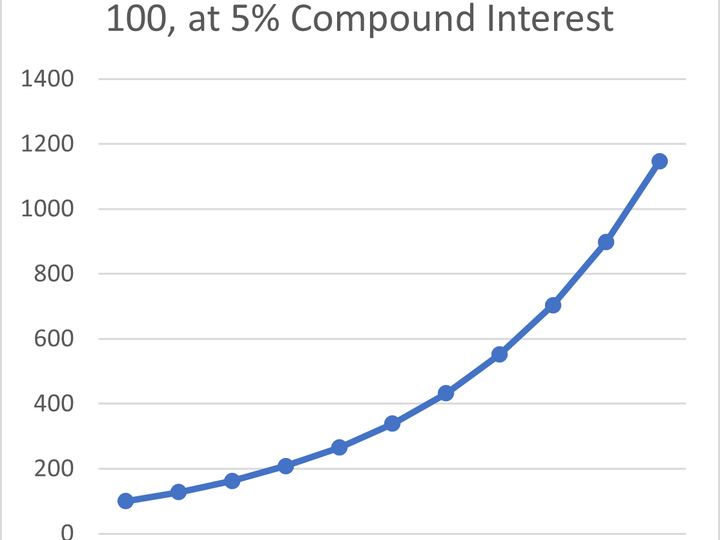
An index such as the S&P 500 tracks a group of companies to show how the market is doing. Owning many companies at once, called diversification, reduces the damage any single company can do. Index funds, covered on our Jack Bogle page, let you own an entire index cheaply. Historically, broad US stock market returns have averaged roughly 10 percent a year before inflation over very long periods, but with big drops along the way and no guarantee.

Key takeaways

A share is part ownership of a business. Prices swing in the short term but have tended to follow company profits over the long term. Diversification through index funds reduces single-company risk. Low fees and long holding periods matter more than clever timing. Only invest money you can leave alone through market drops, ideally for five years or more.

Investing basics

Invest money you will not need for at least five years, because stocks can fall sharply in the short term. Keep fees low, since every percent you pay comes out of your returns. Avoid trying to time the market or chase hot tips. Make sure you have an emergency fund and no high-interest debt first.

This page is general education, not financial, tax or legal advice. Everyone's situation is different, so check official sources and consider talking to a licensed professional before big decisions.

Media credits

Text written by Biggest Bossman.
← Debt Snowball vs Debt AvalancheBonds Explained →

Shop

The Biggest Bossman collection

Tees and hoodies in the Biggest Bossman colors, printed to order in the USA. Use code VIP15 from the newsletter for 15% off your first order.

Watch

Biggest Bossman Shorts

Quick, accurate, under a minute. Every Short is original and made only for this channel.

YouTube @BiggestBossmanOfficial
New Shorts every day. Subscribe so you never miss one.
Subscribe

Latest Shorts

Airbnb survived by selling cereal boxesPhotos: Brian Chesky TechCrunch.jpg - TechCrunch (CC BY 2.0) via Wikimedia Commons | Chambord Apartments (San Francisco).JPG - Sanfranman59 (CC BY-SA 4.0) via Wikimedia Commons | Bowl of Cereal (Unsplash).jpg - Yvens Banatte yvensb (CC0) via Wikimedia Commons | Cereal-Fruity-Pebbles.jpg - Evan-Amos (Public domain) via Wikimedia Commons | Bowl of mixed cereals.jpg - Toby Scratch Fanatic (CC0) via Wikimedia
Costco makes much of its profit from memberships, not productsPhotos: Costco (14965).jpg - EvanCarroll (CC BY-SA 4.0) via Wikimedia Commons | Costcointerior.jpg - Original uploader was Coolcaesar at en.wikipedia (CC BY-SA 3.0) via Wikimedia Commons | Costco Empty shelves March 2, 2020.agr.jpg - ArnoldReinhold (CC BY-SA 4.0) via Wikimedia Commons | Ikea warehouse interior.JPG - self-made (CC BY-SA 2.5 ca) via Wikimedia Commons | Shopping carts Tegut Tauberbischofshei
She turned $5,000 of savings into a billion dollar companyPhotos: Sara Blakely 2012 Shankbone.JPG - David Shankbone (CC BY 3.0) via Wikimedia Commons | Sara Blakely.jpg - Gillian Zoe Segal (CC BY-SA 4.0) via Wikimedia Commons | Fax machine printing.jpg - RikkisRefuge Other (CC BY 2.0) via Wikimedia Commons | Slater Mill - textile machines.jpg - Bestbudbrian (CC BY-SA 3.0) via Wikimedia Commons | Cotton textile mill interior with machines producing cotton thread,
The rule of 72 tells you when your money doublesPhotos: Börse Frankfurt stock exchange - Germany - Luminale 2014 - April 3rd 2014 - 02.jpg - Norbert Nagel (CC BY-SA 3.0) via Wikimedia Commons | Frankfurt Stock Exchange (Ank Kumar) 03.jpg - Ank Kumar (CC BY-SA 4.0) via Wikimedia Commons | Stack of coins 0214.jpg - Dori (Public domain) via Wikimedia Commons | -finance -wealth -savings -security -coin.jpg - Free Images (CC BY 2.0) via Wikimedia Commons |
Why printers are cheap and ink costs a fortunePhotos: Inkjet printer with covers removed.JPG - Snewkirk7953 (CC BY-SA 3.0) via Wikimedia Commons | Inkjet printer, no case, backside.JPG - Klosito (CC BY-SA 3.0) via Wikimedia Commons | Chrome-Safety-Razor.jpg - Evan-Amos (Public domain) via Wikimedia Commons | Razor blade (358309802).jpg - scott feldstein from West Bend, United States (CC BY 2.0) via Wikimedia Commons | Photograph of King Camp Gillette
Newsletter

The weekly Bossman brief

One true founder story and one plain money lesson every week, plus new pages as they go live. Education only, never financial advice.